Why Modern Buyers Demand The Human Premium Over Automation
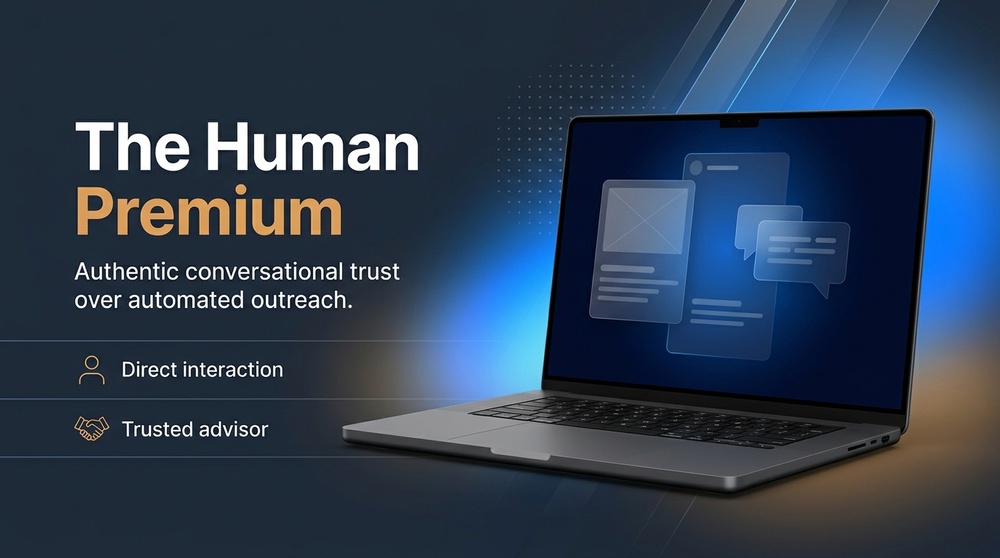
Modern organizations increasingly rely on automated sequences, synthetic messaging, and algorithmic workflows to interact with prospective clients. While these tools promise efficiency and rapid scale, they often introduce an unintended friction point into commercial pipelines. When communications become mechanical, buyers encounter standardized templates that fail to address unique enterprise hurdles, nuanced operational realities, or personal accountability. As automated interactions saturate everyday corporate channels, your prospective clients begin actively filtering out generic outbound touchpoints in search of authentic dialogue.
This operational reality has introduced a pronounced commercial shift: buyers now place measurable value on real human engagement. When you examine customer friction points, the issue is rarely a lack of technical information. Prospective accounts can easily access specifications, pricing sheets, and product feature matrices independently. Instead, they struggle with interpretation, internal consensus, and the mitigation of risk. They want dedicated professionals who can translate broad data into practical business outcomes. Cultivating strong direct sales skills across your teams allows your organization to bridge the gap between static technical data and complex client objectives.
When an enterprise transaction carries substantial financial or organizational weight, reliance on self-serve portals or rigid chatbots introduces friction. Decision-makers demand experienced counsel that accounts for political dynamics, legacy architecture, and market exposure. By deploying consultative selling strategies, you position your commercial teams to serve as strategic partners rather than transactional vendors. Recognizing this market pivot allows your organization to differentiate itself through high-caliber interpersonal execution, turning genuine commercial relationships into a primary competitive advantage.
The Strategic Value of the Human Premium in Sales
The human premium in sales represents the distinct commercial advantage earned when an organization prioritizes skilled interpersonal communication over detached automation. Buyers consistently demonstrate a willingness to pay more, commit faster, and sign longer agreements when they interact with professionals who actively listen and diagnose operational bottlenecks. While algorithmic tools can process transactions, they cannot read between the lines during high-stakes evaluations or adapt in real time to the emotional undertones of a boardroom meeting. When you provide an articulate, thoughtful representative, you validate the client’s specific business reality.
Automation excels at linear tasks such as scheduling confirmations, data aggregation, and basic lead categorization. However, high-value commercial pursuits are rarely linear. Your prospects must manage conflicting priorities among executive peers, satisfy internal procurement policies, and mitigate the risk of operational disruption. Human representatives provide contextual clarity that automated systems cannot duplicate. They identify unstated anxieties, clarify ambiguities, and synthesize qualitative feedback into workable resolutions that move deals forward.
Furthermore, this dynamic changes how your organization earns customer loyalty. Relationships established entirely through automated channels remain highly vulnerable to price competition. When you establish your client partnerships through dedicated personal advocacy, you create switching costs rooted in mutual trust and verified outcomes. Clients hesitate to abandon relationships where an account executive understands their historical challenges and internal operational cadence.
- Individual accountability eliminates the frustration of faceless customer service queues and automated ticketing systems.
- In-person and live verbal exchanges reveal hidden priorities that rarely surface within automated questionnaires.
- Authentic executive presence instills organizational confidence, reassuring stakeholders that their commercial interests are protected.
- Custom dialogue clarifies complex implementation timelines far more effectively than standardized documentation libraries.
Refining Direct Sales Skills to Outperform Algorithmic Outreach
To capture this buyer preference, your commercial representatives must master direct sales skills that go far beyond reciting product features. Traditional direct communication requires active listening, precise articulation, and deep commercial empathy. When your professionals engage directly with stakeholders, they must demonstrate an immediate grasp of the customer’s economic model. This level of preparation demonstrates respect for the prospect’s time and separates your approach from the repetitive automated messages flooding their corporate inbox.
Developing these competencies requires rigorous, daily practice in live environments. Your team members must learn to read body language, calibrate vocal cadence, and ask provocative questions that challenge conventional thinking. These capabilities cannot be downloaded through software updates; they are built through structured mentorship, ongoing real-world interactions, and performance accountability. When you teach your staff to conduct direct, face-to-face or voice-to-voice client interactions, you equip them to address objections before those objections crystallize into formal rejections.
Direct communication also accelerates the velocity of your pipeline. Automated email cadences often drag discussions out over several weeks, leaving ample room for prospects to lose momentum or turn their attention elsewhere. A focused, direct interaction allows your representatives to resolve uncertainties, answer technical questions, and secure verbal commitments in a single sitting. This immediacy reduces sales cycle friction and provides your leadership team with reliable pipeline forecasting.
By prioritizing authentic communication skills over superficial software volume, your agency establishes an elite standard of representation. Your personnel become trusted advisors capable of navigating high-level corporate environments with confidence. This mastery preserves your pricing power, protects your gross margins, and reinforces your market presence across every region you serve.
Executing Consultative Selling Strategies in Saturated Markets
Modern buyers do not need sales professionals to describe standard catalog features; they require objective advisors who can diagnose structural challenges and guide them toward profitable outcomes. Consultative selling strategies focus on identifying the gap between where a client’s business currently sits and where executive management wants it to go. This methodology demands intellectual curiosity, diagnostic discipline, and the confidence to recommend solutions based purely on client utility.
When you employ a consultative approach, your initial interactions center around discovery rather than presentation. Your representatives conduct disciplined, comprehensive reviews of the prospect’s operational bottlenecks, historical initiatives, and immediate budgetary parameters. By asking targeted questions, your team encourages buyers to articulate pain points they may not have previously recognized. This collaborative diagnostic phase establishes immediate credibility and reframes the commercial relationship from an adversarial negotiation into a unified problem-solving session.
Consultative alignment requires your teams to tailor their recommendations to the specific organizational structure of the customer. Automated platforms often push uniform solutions that overlook idiosyncratic operational constraints. In contrast, a consultative specialist highlights the specific aspects of your service offering that yield measurable efficiency for that particular business unit, building a tailored business case that stands up to strict internal executive review.
- Comprehensive operational discovery replaces rapid, superficial sales pitches with evidence-based diagnosis.
- Tailored implementation roadmaps demonstrate operational feasibility prior to contract execution.
- Proactive risk mitigation discussions disarm client skepticism and foster transparent dialogue.
- Continuous alignment checks confirm that all organizational stakeholders share a consistent vision for success.
Rebuilding Trust in an Era of Digital Fatigue
Corporate decision-makers are experiencing severe digital fatigue caused by an endless influx of automated correspondence, synthetic outreach, and generic sales sequences. When every vendor utilizes identical outbound software stacks, individual communications blend into background noise. Buyers respond by erecting defensive barriers: ignoring direct messages, implementing aggressive email filters, and refusing to engage with impersonal solicitations. To penetrate this barrier, your enterprise must cut through the noise with undeniable authenticity.
Trust is an emotional and intellectual metric developed through consistent, personal dependability. When you send real human professionals to meet prospects, attend local business gatherings, and conduct direct client acquisition, you communicate a serious commitment to the partnership. Showing up in person or establishing dedicated voice contact demonstrates that you value the prospect enough to invest real time and resources into the relationship, immediately establishing your business as an accountable partner.
This human foundation proves especially powerful during complex implementations or unexpected operational disruptions. When unforeseen issues arise, automated notification loops and support tickets alienate customers. In contrast, having a dedicated account lead who steps forward, takes ownership of the issue, and communicates a swift resolution preserves the relationship. Buyers value this safety net and actively reward organizations that prioritize personal support over automated deflection.
Rebuilding corporate trust demands that your representatives hold themselves to high ethical standards and clear communication norms. When your organization consistently honors its commitments, shows up prepared, and communicates transparently, your brand reputation strengthens. In tight-knit commercial ecosystems, this reputational equity spreads rapidly via word of mouth, opening doors that automation could never access.
Constructing High-Performing Direct Teams Through Hands-On Mentorship
Capitalizing on buyer preference for real interpersonal connection requires a repeatable internal system for developing high-performing commercial talent. Outstanding direct representatives are built through structured, daily training and clear accountability. If you want your team to convey executive presence and master consultative frameworks, you must provide continuous hands-on development that connects daily effort to career advancement.
Traditional corporate training programs often rely on passive video modules or static handbooks that rarely translate into operational capability. Elite agencies prioritize live skill application, practical simulations, and side-by-side mentorship from experienced senior performers. When junior professionals observe how experienced leaders read an executive room, manage tense negotiations, and steer complex discovery sessions, they internalize critical behavioral patterns rapidly. This apprentice-style development accelerates skill acquisition and protects your brand reputation in the field.
Performance-based advancement systems naturally complement this hands-on coaching model. When your representatives know that their professional trajectory, compensation, and leadership opportunities depend directly on measurable client outcomes rather than bureaucratic tenure, their focus intensifies. Ambitious individuals take complete ownership of their client interactions, refine their communication skills, and strive for excellence every day. This creates an energetic, collaborative internal culture that continuously attracts ambitious professionals.
- Daily practical coaching builds authentic conversational instincts far faster than theoretical classroom instruction.
- Pairing emerging talent with experienced mentors safeguards client interactions and accelerates professional maturity.
- Merit-based promotion paths encourage continuous personal accountability and retain high-performing individuals.
- Direct, in-person campaign execution provides immediate, unvarnished feedback on communication efficacy.
Scaling Enterprise Growth Through Interpersonal Authority
Scaling a commercial enterprise does not require abandoning human connection in favor of absolute digital automation. True commercial leverage occurs when you balance efficient operational back-office systems with high-caliber, face-to-face or voice-to-voice direct representation. By optimizing internal reporting while keeping client-facing touchpoints personal, your organization captures significant market share from competitors who rely entirely on generic, automated outreach.
The human premium in sales is not a temporary trend; it is a fundamental market correction against the proliferation of low-effort digital outreach. As synthetic interactions become ubiquitous, authentic human expertise becomes a rare, highly valued commercial asset. When you equip your enterprise with refined direct sales skills and proven consultative selling strategies, you position your brand as a premier provider capable of solving sophisticated organizational challenges.
To evaluate your current commercial outreach frameworks and explore structured opportunities for developing elite sales teams within your regional market, connect directly with our leadership team for a detailed assessment at kameronpenfield@gmail.com. We can review your market positioning, evaluate your direct client acquisition models, and outline practical methodologies to help you build reliable, people-centered business partnerships that drive long-term revenue growth.